

the hlsk guide to
Choosing a diamond
At HLSK, we believe choosing a diamond should feel exciting rather than overwhelming. While grading reports and technical specifications can be useful tools, the most important thing is finding a stone that speaks to you.
Some possess extraordinary brilliance, others captivate through their character, proportions, or subtle warmth. The most memorable diamonds are often not the most technically flawless, but the ones that evoke a feeling the moment you see them.
This guide will help you understand the qualities that make every diamond unique.
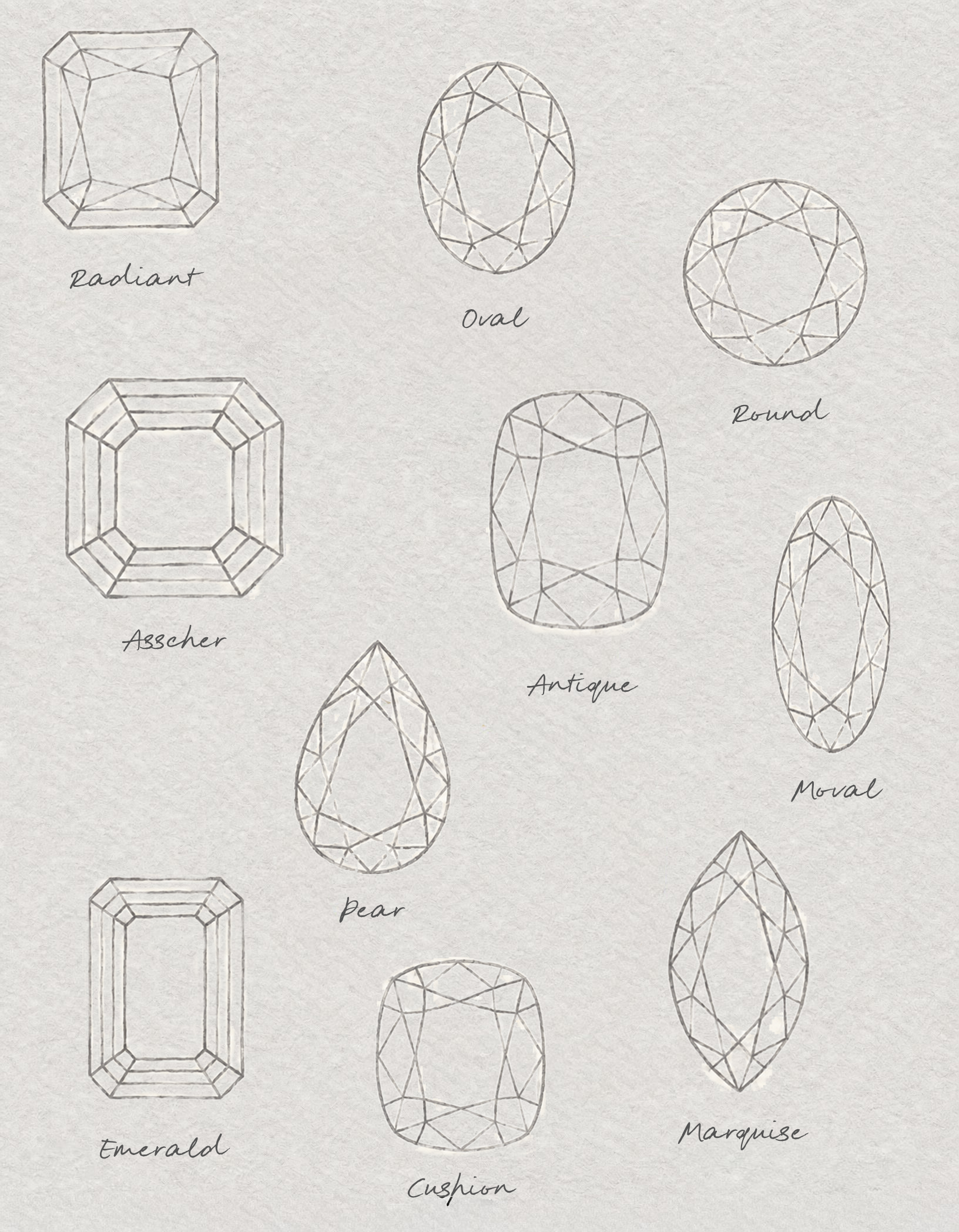
shape
Shape is the personality of a diamond.
Before considering colour, clarity or carat weight, most clients instinctively gravitate towards a shape. It is often the first decision in creating an engagement ring and sets the tone for the entire piece.
This guide will help you understand the qualities that make every diamond unique.

Colour
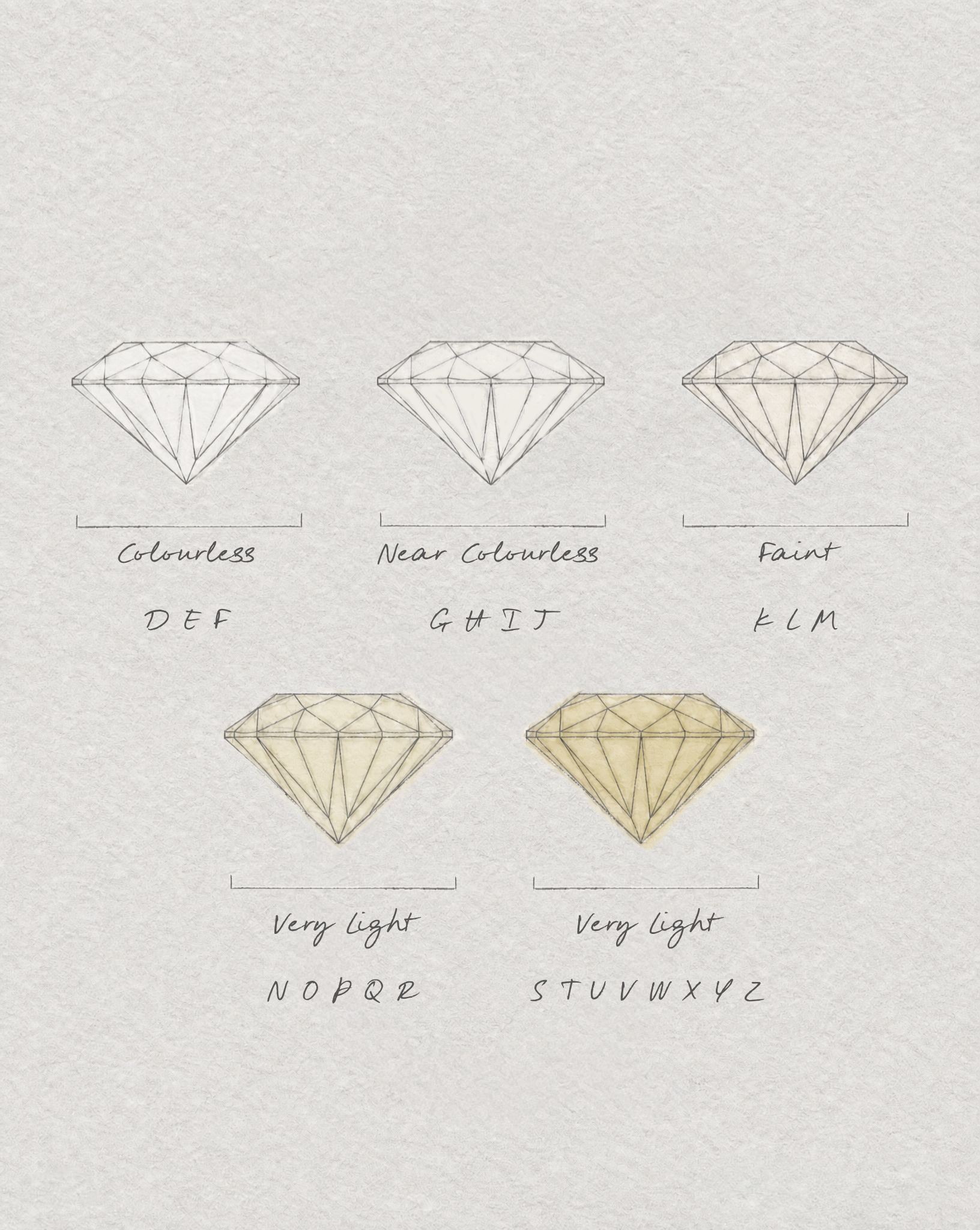
White diamonds are graded on a scale from D to Z.
The closer a diamond is to D, the less body colour it contains.
However, colour is often more nuanced than it looks as Champagne diamonds are now just as revered for their unique brown shades and tones.

Clarity
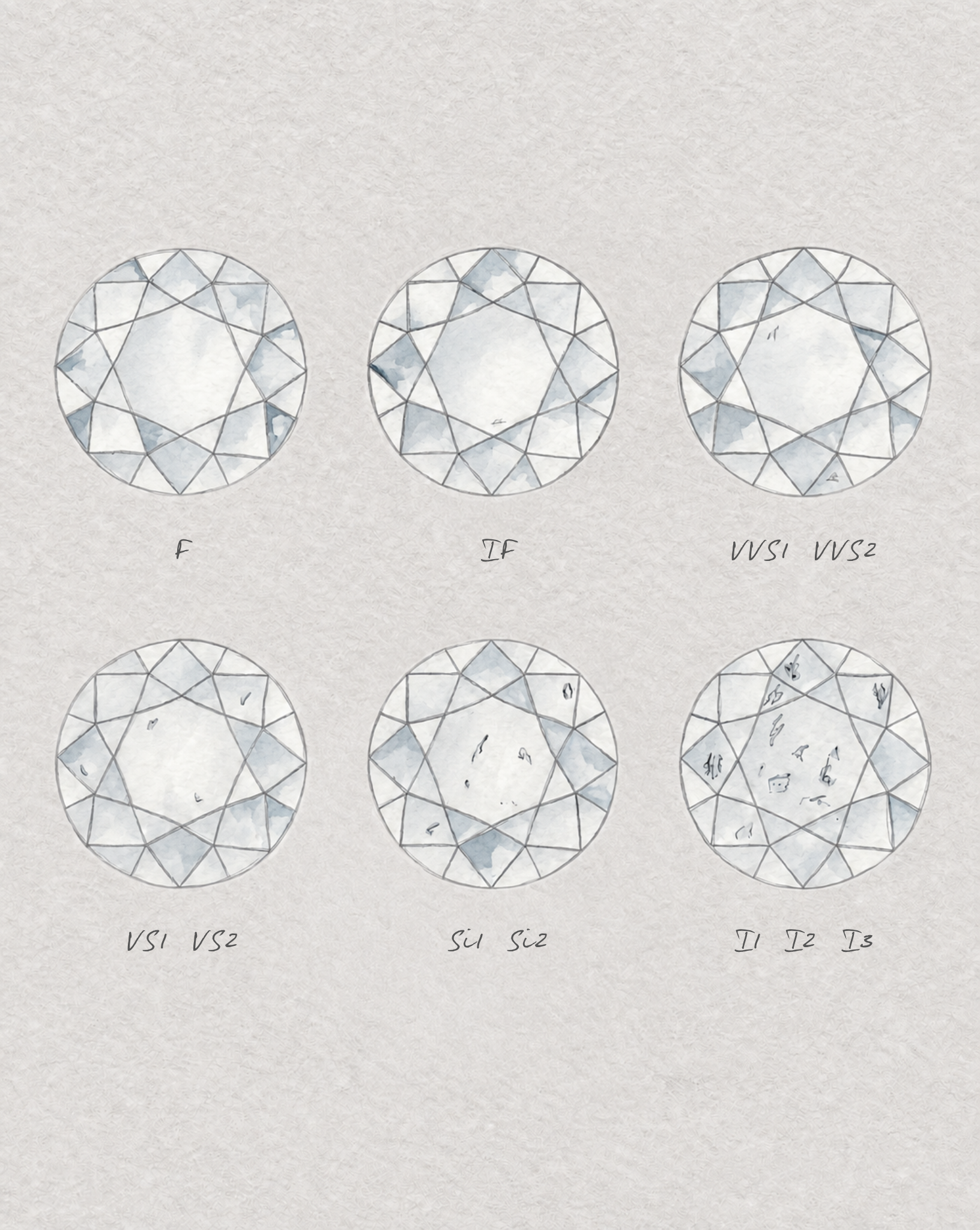
Every natural diamond contains tiny internal characteristics formed during its creation beneath the earth's surface.
These are known as inclusions.
Most are completely invisible to the naked eye and have no impact on a diamond's beauty.
For this reason, we focus on diamonds that appear eye-clean rather than pursuing unnecessarily high clarity grades.
A diamond should be admired with the eye, not a microscope.
Exceptionally rare diamonds with no visible imperfections under 10× magnification.
Beautifully pure diamonds with no internal inclusions visible under magnification.
Tiny natural characteristics that are extremely difficult to detect, even under magnification.
Minor inclusions visible under magnification but generally undetectable to the naked eye.
Noticeable inclusions under magnification,
but some undetectable to the naked eye, offering an excellent balance of beauty and value.
Diamond Cut
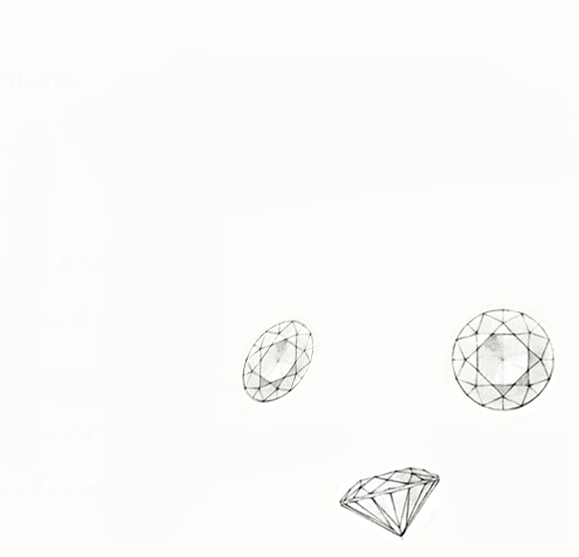
Diamond cut is often confused with shape, but they refer to two very different characteristics. Shape describes a diamond's outline—such as round, oval or cushion—while cut refers to the precision of its proportions, symmetry and facet arrangement.
Of all the Four Cs, cut has the greatest influence on a diamond's beauty. It determines how effectively light travels through the stone and returns to the eye, creating the brilliance, fire and sparkle that diamonds are celebrated for.
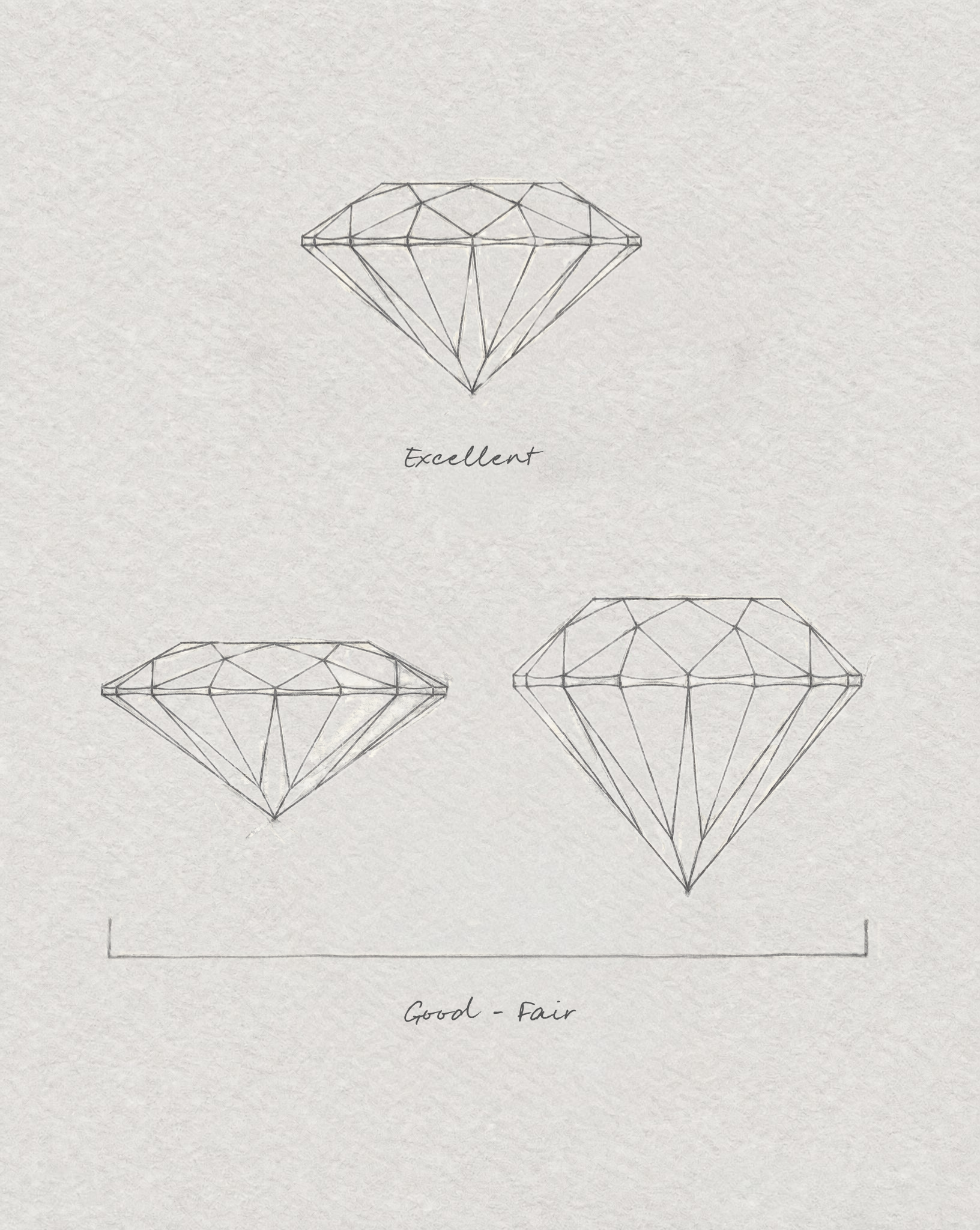
For Round Brilliant diamonds, the Gemological Institute of America (GIA) grades cut quality on a scale of Excellent, Very Good, Good, Fair and Poor. This grading system is unique to round diamonds, whose facet arrangement has been standardised over time.
When evaluating cut quality, three key visual characteristics are considered:
- Brightness – The white light reflected from within the diamond.
- Fire – The flashes of spectral colour created as light disperses through the facets.
- Scintillation – The dynamic sparkle and contrast seen as the diamond moves.
A beautifully cut diamond is carefully proportioned to maximise the return of light, creating exceptional brilliance and life. When a diamond is cut too shallow or too deep, light can escape through the sides or base of the stone rather than reflecting back to the eye. As a result, even a diamond with excellent colour and clarity may appear less vibrant than a well-cut stone.